
Understanding Early Symptoms of Alzheimer’s
Understanding Early Symptoms of Alzheimer’s – Blog 1
By The Olive Branch Medical — A Place of Love and Care for Those Living with Alzheimer’s and Dementia
When a loved one begins to forget things — small things at first, like a recipe they’ve made for years or the way to a familiar shop – it’s easy to brush it off as “just ageing.”
We tell ourselves, “Everyone forgets sometimes.”
And for a while, that feels true.
But sometimes, those little moments of forgetfulness whisper something deeper.
At The Olive Branch Medical, we often meet families who arrive worried, unsure, and searching for answers. They’ll tell us stories like,
“Mom started misplacing her keys, then her purse, and then she forgot she’d already eaten dinner.”
“Dad began calling me by my brother’s name, and then one day, he couldn’t find the way home from the shop he’s been going to for 20 years.”
Each story is different, but the emotion behind them is the same – love, confusion, and the aching hope that everything will go back to normal.
That’s where understanding the early symptoms of Alzheimer’s disease becomes so important. Awareness doesn’t take away the pain, but it replaces fear with knowledge — and knowledge brings compassion.
What Is Alzheimer’s Disease?
Alzheimer’s is the most common cause of dementia, accounting for around 60–70% of all cases. It’s a progressive condition that slowly affects how the brain stores and recalls information.
In the early stages, changes are often subtle – almost invisible to those around. But over time, they begin to show up in daily life: forgotten conversations, misplaced objects, a sudden difficulty finding the right word.
The Early Signs — What to Look For
Early symptoms don’t look the same for everyone, but there are a few common threads we often see among our residents and their families:
1. Memory Loss That Disrupts Daily Life
It’s normal to forget where you put your glasses. But it’s not normal to forget where the kitchen is, or to ask the same question over and over again.
This kind of memory loss goes beyond forgetfulness – it begins to interfere with independence and routine.
2. Difficulty Following Conversations or Instructions
Someone with early Alzheimer’s might lose track mid-sentence or repeat phrases because they’ve forgotten what they just said.
They may struggle to follow a recipe they’ve used for years, or to manage steps in a familiar task like paying bills or making tea.
3. Confusion About Time or Place
Losing track of time, days, or even seasons is another sign. Some people begin to feel disoriented in familiar places or forget why they walked into a room.
We often hear, “Mom just seems lost in her own home.”
4. Changes in Mood or Personality
Alzheimer’s can quietly change the way a person experiences the world. They might become more anxious, withdrawn, or unusually irritable.
It’s not that they’re “being difficult” – their brain is processing things differently, and that can feel overwhelming.
5. Misplacing Things in Unusual Places
Keys in the fridge. The TV remote in a shoe. Clothes folded neatly in the wrong cupboard.
These are more than accidents – they’re small signs of the brain’s growing struggle to connect memories and meaning.
Qualified Staff and Support
Our entire team are qualified to handle patients who have Alzheimer’s and Dementia.
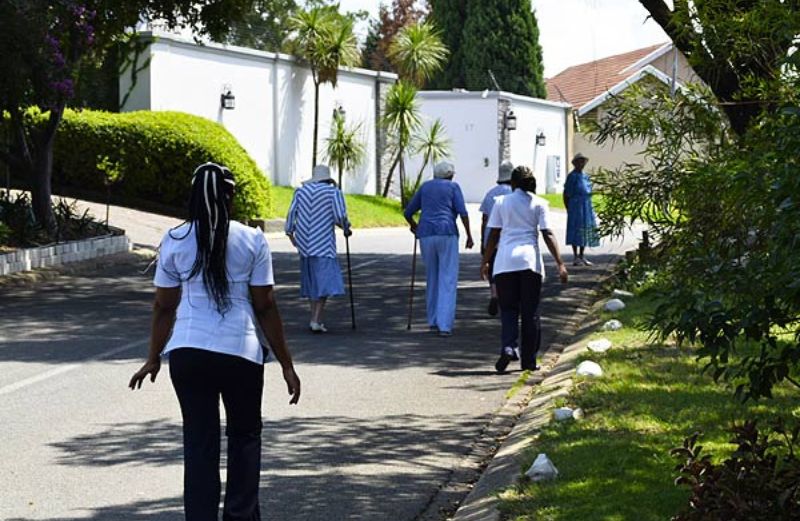
Our dedicated team is our greatest asset, and they are extremely caring and loving towards all patients. They are on duty 24 hours a day, and our live-in matron is there to support our patients and their families.
Visit our Contact Page to book a tour – HERE
A Story That Feels Familiar
Let’s imagine Mary.
Mary has always been the heart of her home – a brilliant cook, a warm laugh, a woman who never forgot a birthday.
But lately, her daughter notices things. The stove left on. A half-finished sentence that trails off.
When asked what she did that morning, Mary smiles, then frowns. “I… I can’t quite remember.”
It’s moments like these, tender, confusing, and filled with love, that mark the beginning of many Alzheimer’s journeys.
Her daughter hesitates. “Maybe it’s just age,” she tells herself. But deep down, she knows something’s changing.
That quiet knowing is what brings families to us at The Olive Branch Medical.
And when they do, we remind them: this isn’t just about loss – it’s about care, understanding, and creating moments of peace through the storm.
Why Early Diagnosis Matters
Recognising symptoms early allows families to:
- Get medical guidance and support sooner.
- Create a care plan that maintains independence for as long as possible.
- Access resources, memory therapies, and emotional support.
- Give their loved one the best chance for comfort, dignity, and stability.
At The Olive Branch Medical, we always say: “Knowing is caring.”
When you understand what’s happening, you can meet your loved one with empathy rather than frustration – and build a care environment filled with warmth, not worry.
Our Approach at The Olive Branch Medical
Every person we care for has a story worth cherishing.
Our role is to honour that story – even when words fade.
Through gentle routines, familiar surroundings, and patient companionship, we help each resident feel safe, calm, and valued.
Our caregivers are not just skilled professionals; they are kind souls who listen, laugh, and walk beside each resident with genuine love.
Because to us, care is not only about medicine – it’s about human connection.
When You’re Ready to Take the Next Step
If you’ve begun to notice changes in someone you love, don’t wait in silence.
Reach out. Ask questions. Seek support.
You don’t have to do this alone.
At The Olive Branch Medical, we’ll walk this journey with you – with compassion, understanding, and dignity at the heart of everything we do.
Call us today or book a visit to learn how we can support your family with loving Alzheimer’s and dementia care in South Africa.