
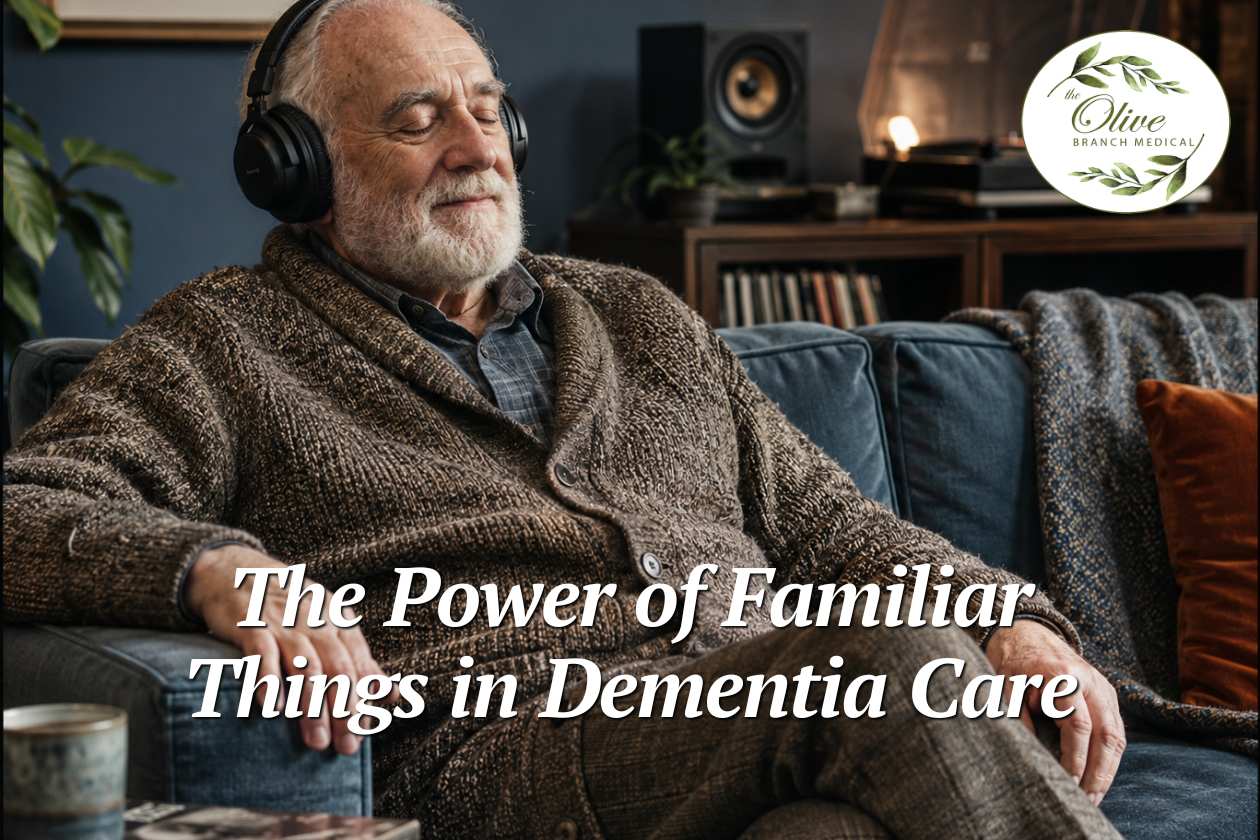
The Power of Familiar Things in Dementia Care
By The Olive Branch Medical — A Place of Love and Care for Those Living with Alzheimer’s and Dementia
When someone you love is living with Dementia or Alzheimer’s, the world around them can sometimes feel confusing. Places may seem unfamiliar. Conversations may become harder to follow. Names, dates and details may come and go.
But even when memory changes, comfort can still be found in familiar things.
A favourite song. A well-loved photograph. The smell of a familiar meal. A soft blanket. A gentle routine. These small things can bring moments of peace, connection and reassurance.
In Dementia care, familiar things are not just objects. They can become anchors. They help a person feel safer, calmer and more connected to the life they have lived.
Familiar Things Can Bring Comfort
For someone living with Dementia, too much change can feel overwhelming. New faces, new rooms, loud sounds or busy environments may create uncertainty.
Familiar items can help soften that experience.
A favourite cardigan, a treasured photo album, a familiar piece of music or even a regular cup of tea can create a sense of comfort. These things remind the person of home, family and routine.
They do not need to remember every detail for the feeling to matter.
Sometimes it is not about remembering the exact moment. It is about feeling the warmth connected to it.
Music Can Reach the Heart
Music can be especially powerful.
A song from earlier years, a favourite hymn, a wedding song or a familiar tune from childhood can bring joy, calm and connection. Even when conversation becomes difficult, music may still create a beautiful shared moment.
A loved one may tap their foot, hum along, smile or simply become more relaxed.
Families can help by sharing the songs their loved one enjoyed. This may include music from special family moments, church, celebrations, cultural traditions or peaceful everyday routines.
A familiar song can say what words sometimes cannot.
Photographs Tell a Gentle Story
Photos can be a lovely way to connect, but they should be used gently.
Instead of asking, “Do you remember this?” try saying:
“This was such a happy day.”
Or:
“You looked so beautiful here.”
This removes pressure and allows the person to enjoy the moment without feeling tested.
Photo albums, framed family pictures or familiar images from places they loved can help create calm conversation. Even if they cannot name everyone in the photo, they may still feel a sense of belonging.
The aim is not to correct or quiz. The aim is to connect.
Familiar Routines Can Create Safety
Routine is one of the most comforting parts of Dementia care.
Simple, predictable daily rhythms can help a person feel more settled. Waking up at a similar time, having meals in a familiar way, enjoying a morning walk, listening to music after lunch or having quiet time in the afternoon can all create emotional safety.
Routine does not need to be strict. It should feel gentle and supportive.
At The Olive Branch Medical, we understand that each resident is different. Personalised care means learning what brings comfort to each person and building those familiar moments into daily life.
Personal Items Help Preserve Identity
A person living with Dementia is still the same person, with a life story, personality, preferences and dignity.
Personal items can help honour that identity.
This may include:
Family photographs
A favourite blanket
A familiar perfume or lotion
A special ornament
A favourite book
A meaningful religious item
A comfortable jersey
A small item from home
These belongings can help create a space that feels less clinical and more personal.
They remind everyone that care is not only about safety. It is also about dignity, memory, comfort and love.
Favourite Foods and Scents Can Bring Warmth
The smell of a familiar meal can bring comfort in a very special way.
A favourite soup, freshly baked bread, tea, a family recipe or a familiar scent can create a peaceful moment. Food and scent are often connected to deep memories, family traditions and emotional comfort.
Of course, food should always be suitable for the person’s needs and care plan. Families can speak to the care team about what is appropriate and safe.
Even something simple, like the smell of tea or a favourite biscuit, can bring a sense of home.
Connection Does Not Have to Be Perfect
Families sometimes feel sad when a loved one cannot remember things in the same way anymore. It can feel painful when stories are forgotten or names become difficult.
But connection is still possible.
A visit does not need to be filled with perfect conversation. You can sit together, listen to music, look through photos, hold hands, share a smile or enjoy a quiet moment.
Love can still be felt.
Presence matters. Kindness matters. Familiar comfort matters.
How Families Can Help
Families play an important role in helping the care team understand what feels familiar and comforting.
You can share helpful details such as:
What music they enjoyed
Their favourite foods
Their daily habits
Special family traditions
Their hobbies and interests
Their spiritual or cultural preferences
Names of close family members
Things that make them feel calm
Things that may upset or overwhelm them
These small details help create more personalised, compassionate care.
At The Olive Branch Medical, we believe every person deserves to be cared for as an individual. Their story matters. Their comfort matters. Their dignity matters.
Frequently Asked Questions
Why are familiar things important in Dementia care?
Familiar things can help a person living with Dementia feel calmer, safer and more connected. They may not always remember every detail, but familiar items, music, routines and scents can still bring comfort.
What familiar items should I bring for my loved one?
You can bring items such as family photos, a favourite blanket, a comfortable jersey, meaningful ornaments, familiar music, a favourite book or a personal item from home. It is best to check with the care team first, especially for valuable or delicate items.
Can music help someone living with Dementia?
Yes, music can be a beautiful way to connect. A familiar song may bring joy, calm or a sense of comfort, even when conversation is difficult. Families can share favourite songs or meaningful music with the care team.
What should I avoid when using photos or memories?
Try not to test your loved one’s memory by asking too many questions such as, “Do you remember this?” Rather use gentle statements like, “This was a lovely day,” or “You always enjoyed this place.” This keeps the moment warm and pressure-free.
How can I help the care team understand my loved one better?
Share details about their life, routines, likes, dislikes, favourite music, foods, hobbies, family traditions and comforting habits. These personal details help the care team provide care that feels more familiar, respectful and supportive.
Final Thought
Familiar things have a quiet kind of power.
They can bring calm when the world feels confusing. They can create connection when words become harder. They can remind a person that they are safe, loved and not alone.
In Dementia care, the smallest things often become the most meaningful.
A song. A photograph. A warm cup of tea. A soft blanket. A familiar voice.
These are not just simple comforts.
They are moments of love.
At The Olive Branch Medical, we care with both skill and heart, creating a safe, warm and dignity-centred environment for those living with Alzheimer’s and Dementia.
Qualified Staff and Support
Our entire team are qualified to handle patients who have Alzheimer’s and Dementia.
Our dedicated team is our greatest asset, and they are extremely caring and loving towards all patients. They are on duty 24 hours a day, and our live-in matron is there to support our patients and their families.
Visit our Contact Page to book a tour – HERE